Stateless
Содержание:
How Stateless Application Works?
Stateless Architecture means the app is dependent only on Third-party storage because it doesn’t store any kind of state in memory or on its disk. All data it needs or requires has to fetch from some other stateful service (Database) or are present in the CRUD request. Requests load balanced to any replica of a stateless service because it has all data stored somewhere else, usually DB with persistent storage.
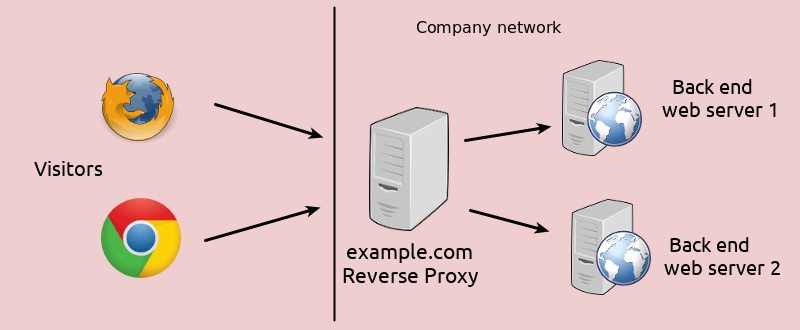
When the volume of concurrent users grows in size in Stateful applications, more servers run the applications added, and load distributed evenly between those servers using a load-balancer. But since each server ‘remembers’ each logged-in user’s state, it becomes necessary to configure this load balancer in ‘sticky-mode.’ At the same time, distributing the load across servers, the load-balancer required to send each user’s request to the same server that responds to that user’s previous request, to process the request correctly, which defeats the purpose of load balancing because load not being distributed in a true Round-Robin fashion.
The server-side logic coded in such a way that it does not depend on the ‘previously-stored state’ of the client. The state information sent along with each request, to the server through which the server proceeds with servicing the request. Load-balancer doesn’t need to worry about routing requests to the same server, and truly uniform load balancing achieved. The load balancer sends traffic to any server & request serviced well since client sending token or other needful info with each request. JSON Web Token (JWT) widely used to create Stateless applications.
Дискография
| Stateless | |
|---|---|
| Студийные альбомы | 2 |
| Мини-альбомы | 2 |
| Синглы | 7 |
| Видеоклипы | 4 |
Студийные альбомы
| Год | Подробности |
|---|---|
| 2007 |
Stateless
|
| 2011 |
Matilda
|
Мини-альбомы
| Год | Подробности |
|---|---|
| 2005 |
The Bloodstream EP
|
| 2011 |
I’m On Fire EP
|
Синглы
| Дата | Сингл | Высшие позиции в чартах | Альбом |
|---|---|---|---|
|
Dance |
|||
| 05.04.2004 | «Down Here» | — | Stateless |
| 14.05.2007 | «Exit» | — | |
| 30.07.2007 | «Prism #1» | — | |
| 29.10.2007 | «Bloodstream» | 25 | |
| 20.07.2008 | «Window 23» / «The Great White Whale» (при участии Гевина Каслтона) | — | — |
| 15.11.2010 | «Ariel» | — | Matilda |
| 14.02.2011 | «Assassinations» | — |
Видеоклипы
| Год | Песня | Режиссёр(ы) |
|---|---|---|
| 2004 | «Down Here» | Бен Иб |
| 2007 | «Prism #1» | MODEFY (Мо Стоб) |
| «Bloodstream» | Mox | |
| 2010 | «Ariel» | FIELD |
| 2011 | «I’m on Fire» | Энн Паас |
Discography
| Stateless discography | |
|---|---|
| Studio albums | 2 |
| Music videos | 4 |
| EPs | 1 |
| Singles | 7 |
|
|
Singles
| Year | Date | Single | Album | Label | Format(s) |
|---|---|---|---|---|---|
| 2004 | 5 April | «Down Here» | Stateless | Sony Music | 7″, CDS |
| 2007 | 14 May | «Exit» | !K7 | 7″ | |
| 30 July | «Prism No. 1» | 12″, CDS | |||
| 29 October | «Bloodstream» | 12″, CDS | |||
| 2008 | 20 July | «Window 23/Great White Whale» (feat. Gavin Castleton) | Single-only | First Word Excursions | 7″ |
| 2010 | 22 November | «Ariel» | Matilda | Ninja Tune | Digital |
| 2011 | 14 February | «Assassinations» | Digital |
Examples
Following example shows the usage of stateful behavioral parameter. The pipeline finds the sum of the integers for distinct elements.
The whole process is repeated in a for loop multiple times to see how the results can be non-deterministic.
public class StatefulExample {

    public static void main (String[] args) {
        for (int i = 0; i < 5; i++) {

            Set<Integer> seen = new HashSet<>();
            IntStream stream = IntStream.of(1, 2, 1, 2, 3, 4, 4, 5);
            int sum = stream.parallel().map(
                //stateful behavioral parameter.
                e -> {
                      if (seen.add(e))
                          return e;
                      else
                          return 0;
                  }).sum();

            System.out.println(sum);

        }
    }
}
Output
19
17
15
17
15
Above example can be fixed by using synchronized set, e.g. the one created with but that would undermine the benefit of parallelism.
We can always find a way to avoid stateful behavioral parameter. Above example can be fixed by replacing stateful lambda expression with distinct operation (which is internally stateful but is safe and deterministic)
public class StatefulFixExample {

    public static void main (String[] args) {
        for (int i = 0; i < 5; i++) {
            IntStream stream = IntStream.of(1, 2, 1, 2, 3, 4, 4, 5);
            int sum = stream.parallel().distinct().sum();
            System.out.println(sum);
        }
    }
}
Output
15
15
15
15
15
Here’s another example which finds the sum of even numbers and at the same time attempts to find the count of those even numbers by using an external count variable.
public class StatefulExample2 {
    private static int count = 0;

    public static void main (String[] args) {
        for (int i = 0; i < 5; i++) {
            process();
        }
    }

     private static void process () {
        count = 0;

        IntStream stream = IntStream.range(1, 1000);
        //finding the sum of even numbers
        int sum = stream.parallel()
                        .filter(i -> {
                            boolean b = i % 2 == 0;
                            if (b) {
                                count++;//updating count hence making lambda stateful.
                            }
                            return b;
                        })
                        .sum();

        System.out.printf("sum :%d  count:%d%n", sum, count);
    }
}
Output
sum :249500  count:365
sum :249500  count:433
sum :249500  count:413
sum :249500  count:437
sum :249500  count:466
As seen in the output ‘count’ is not deterministic.
To fix above code, we are going to find the sum and count separately:
public class StatefulFixExample2 {
    public static void main (String[] args) {
        for (int i = 0; i < 5; i++) {
            process();
        }
    }

    private static void process () {
        IntStream stream = IntStream.range(1, 1000);

        //finding the even numbers
        int[] even = stream.parallel()
                           .filter(i -> i % 2 == 0)
                           .toArray();

        //finding sum
        int sum = IntStream.of(even).parallel().sum();

        System.out.printf("sum :%d  count:%d%n", sum, even.length);
    }
}
Output
sum :249500  count:499
sum :249500  count:499
sum :249500  count:499
sum :249500  count:499
sum :249500  count:499
Dependencies and Technologies Used:
- JDK 1.8
- Maven 3.0.4
Требования, предъявляемые к Операторам
- Установка должна производиться через единственный Deployment: kubectl create -f SOME_OPERATOR_URL/deployment.yaml — и не требовать дополнительных действий.
- При установке Оператора в Kubernetes должен создаваться новый сторонний тип (ThirdPartyResource). Для запуска экземпляров приложений (экземпляров кластеров) и дальнейшего управления ими (обновление версий, изменение размера и др.) пользователь будет использовать этот тип.
- При любой возможности необходимо использовать встроенные в Kubernetes примитивы, такие как Services и ReplicaSets, чтобы задействовать хорошо проверенный и понятный код.
- Необходима обратная совместимость Операторов и поддержка старых версий ресурсов, созданных пользователем.
- При удалении Оператора само приложение должно продолжить функционировать без изменений.
- У пользователей должна быть возможность определять желаемую версию приложения и выполнять оркестровку обновлений версии приложения. Отсутствие обновлений ПО — частый источник проблем эксплуатации и безопасности, поэтому Операторы должны помогать пользователям в этом вопросе.
- Операторы должны тестироваться инструментом типа Chaos Monkey, выявляющим потенциальные сбои в подах, конфигурациях и сети.
Как работают Операторы
ReplicaSetsStatefulSetsStatefulSetsReplicaSetsдополнительную автоматизациюкак же всё это работает?
- подписывается на событийное API в Kubernetes;
- получает из него данные о системе (о своих ReplicaSets, Pods, Services и т.п.);
- получает данные о Third Party Resources (см. примеры ниже);
- реагирует на появление/изменение Third Party Resources (например, на изменение размера, изменение версии и так далее);
- реагирует на изменение состояние системы (о своих ReplicaSets, Pods, Services и т.п.);
- самое главное:
- обращается к Kubernetes API, чтобы создавать всё необходимое (опять же, свои ReplicaSets, Pods, Services…),
- выполняет некоторую магию (можно, для упрощения, думать, что Оператор заходит в сами поды и вызывает команды, например, для вступления в кластер или для апгрейда формата данных при обновлении версии).
DeploymentReplicaSetNamespaceThird Party ResourcesNamespaceThird Party Resources(подробности см. ниже)
Configure & Troubleshoot DHCPv6
DHCPv6 Configuration
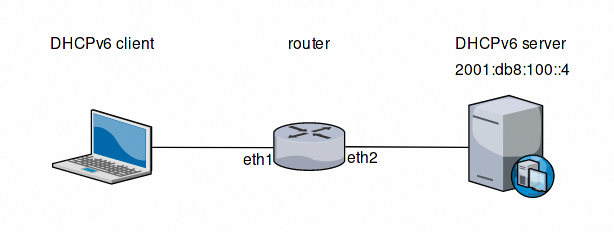
In this part of the article, we are going to cover how to configure Stateless DHCPv6, Stateful DHCPv6, and SLAAC.
Stateless DHCPv6
We decided to start with Stateless DHCPv6 as this is the most comprehensive implementation. It gives you an overview of the commands for both SLAAC and Stateful. According to the requirements, we should use this approach for the “Right” subnet. All basic IPv6 commands, such as or addresses on the interfaces are already in place. As a result, we can focus on the DHCP configuration.
The interface doing routing for the Right subnet is the . To successfully enable Stateless DHCPv6, we need to define a pool with the extra information we want to use, and turn on the flag for that interface. Here’s our step-list.
- Define a pool with the global configuration command, calling it “Right”. This will enter the prompt , where we can configure extra settings.
- In the DHCPv6 prompt, enter the DNS server with command. This must be an IPv6 address, and for this lab, we are using .
- Define the domain name with command, for this lab use .
- Go to the interface configuration mode, and associate the interface with the pool using command.
- Turn on the flag for the interface using command, with no extra parameter.
For your convenience, we grouped all the commands you need to enter hereafter.
ipv6 dhcp pool Right
 dns-server 2001:db8:acad:10::15
 domain-name right.company.local

interface GigabitEthernet 0/1.20
 ipv6 dhcp server Right
 ipv6 nd other-config-flag
Your Packet Tracer score should increase, but clients still won’t get the IPv6 address. We need to do something more.
Configuring clients in Packet Tracer
By default, Packet Tracer clients have no IPv6 address. Furthermore, they are set to be static, which is not what we want for this lab. We need to log into the client and change the setting to Auto-Config. To do that, we simply click on the client and go to the Desktop Tab. From there, we select the first icon (“IP Configuration”).
The following window will appear, and we can change the addressing method for IPv6. For this lab, we should set it to Auto-Config on all clients, in order to take advantage of Neighbor Discovery. However, for a Stateless DHCPv6 network, the setting will automatically switch from Auto-Config to DHCP when the client tires to contact the DHCP server.
 Select Auto Config here.
Apply those settings to all the clients and we are set to go!
Stateful DHCPv6
For this lab, we are not going to configure Stateful DHCPv6. However, its configuration is extremely easy. The first thing we want to do is to tell the pool which prefix is going to manage. To do that, we use the command in the pool configuration prompt. As a parameter, we need to enter a global unicast prefix, for example .
The next step is at the interface level. We need to turn on the flag in the Neighbor Discovery. This is easily done with . The remaining configuration is identical to Stateless DHCPv6.
SLAAC
Unlike DHCPv6, SLAAC is on by default. In other words, every Ethernet interface on a Cisco router with an IPv6 address automatically sends Router Advertisements. As a result, SLAAC is already working on our “Left” subnet: we just need to check clients.
Note: if your clients haven’t obtained the IPv6 address, try to enable the other-config flag on GigabitEthernet 0/1.10. This may be related to a Packet Tracer bug!
Troubleshooting DHCPv6
Cisco always offers us some great commands to check why things went wrong. We have several commands for DHCPv6 too, and here we present them.
We can use to have an overview of the pools currently active on the router. This command presents the pools by name, with the settings of each. If the pool is stateful, the number of connected clients is shown. Otherwise, “Active clients” will always be zero.
 This is the output with the lab completed.
Furthermore, you can use to see all the interfaces with Stateless or Stateful DHCPv6 enabled.
 We used Stateless DHCPv6 only on Gi0/1.20.
If you enabled stateful DHCPv6, you can check your bindings with . Furthermore, to truly analyze what’s happening, use . However, this is an advanced command that you won’t need in simple deployments.
Описание
Файервол отслеживает состояние сетевых соединений (например, TCP или UDP) и в состоянии держать атрибуты каждого соединения в памяти. Эти атрибуты все вместе известны как состояние соединения, и могут включать в себя такие детали, как IP-адреса портов, участвующих в соединениях и порядковые номера пакетов, проходящих через соединение. Проверка с учетом состояния контролирует входящие и исходящие пакеты с течением времени, а также состояние соединения и сохраняет данные в динамических таблицах.
Наиболее ресурсоемким для процессора является проверка во время установки соединения. Записи создаются только для тех соединений TCP или UDP, которые будут удовлетворять заданной политике безопасности. После этого все пакеты (для этой сессии) обрабатываются быстрее, потому что становится проще и быстрее определить, принадлежит ли он к существующей, предварительно отобранной сессии. Пакетам, уже связанным с этими сессиями разрешено проходить через файервол. Если сессия не будет соответствовать ни одному критерию политики безопасности, то ей будет отказано.
Файервол зависит от трехстороннего обмена (иногда описывается как «»), когда используется протокол TCP; когда используется протокол UDP, файервол не зависит ни от чего. Когда клиент создает новое соединение, он посылает пакет с установленным битом SYN в заголовке пакета. Все пакеты с установленным битом SYN считаются для файервола как новые соединения. Если служба которую клиент запросил, доступна на сервере, тогда сервер ответит пакетом, в котором будут установлены оба бита SYN и ACK. Затем клиент отвечает пакетом в котором установлен только бит ACK, и связь будет считаться установленной. В таком случае файервол пропустит все исходящие пакеты от клиента, если они являются частью созданного соединения, гарантируя, что хакеры не смогут создать нежелательную связь с защищенного компьютера.
Если трафик не проходил через это соединение в течение определённого периода, то в целях предотвращения переполнения таблицы состояний эти устаревшие соединения удаляются из таблицы. Многие приложения поэтому отправляют периодически сообщения KeepAlive, чтобы остановить файервол от завершения соединения во время отсутствия активности пользователя, хотя некоторые брандмауэры могут быть проинструктированы для отправки этих сообщений. Многие файерволы могут отслеживать состояние потоков протоколов без установления соединения. Сеансы без установления соединения могут закончиться только в случае не активности пользователя.
Отслеживая состояние соединения, файервол обеспечивает дополнительную эффективность с точки зрения проверки пакетов. Это потому, что для существующих соединений файервола нужно лишь проверить состояние таблицы, вместо проверки пакета по всему набору правил файервола, которые могут быть обширными.
What’s So Bad About Sessions?
In terms of web services, the commonly accepted paradigm is to avoid sessions at all costs. While this certainly doesn’t apply to every single use case, using sessions as a method for communicating state is generally something you want to avoid.
To start with, sessions add a large amount of complexity with very little added value. Sessions make it harder to replicate and fix bugs. Sessions can’t really be “bookmarked”, as everything is stored on the server side. All of these are significant issues, but they pale in comparison to the simple fact that sessions are not scalable.
Gregor Riegler at BeABetterDeveloper gave a wonderful explanation on why this is in his piece “Sessions, a Pitfall”:
Simply said, sessions don’t do what they’re designed to do without introducing a ton of overhead, and their functionality can easily be replicated using cookies, client caching, and other such solutions. There are, of course, situations in which sessions make sense, especially when servers wanted to store state without having even the slight potential of modified client runtime data.
For instance, FTP is stateful for a very good reason, as it replicates changes on both the client side and server side while delivering increased security due to the nature of the requested access. This is doable because a single person needs to access a single server for a single stated data transferral, even if the transferral involves multiple folders, files, and directories.
That’s not the case with something like a shared Dropbox, in which stateful sessions would cause the added complexity without adding value. In this case, stateless would be a much better choice.
Bringing Statefulness to Containers
How can a container be stateful, if it doesn’t have persistent storage? There are now several well-established vendors that do provide persistent storage for containers, including databases for storing container state information.
Companies such as Docker, Kubernetes, Flocker, and Mesosphere provide ways of managing both stateless and stateful containers using persistently stored data. Most of the key vendors in the container industry appear to see statefulness as a major part of the container landscape, and one that is here to stay, rather than being a vestige of pre-container development style. For most developers, the question is not whether to use stateful containers, but when they should be used.
Stateless or Stateful?
When should you use stateful containers, and when are stateless containers better? Not surprisingly, the answer depends to a large extent on the kind of software that you are deploying, and what it needs to do. Does it need to save information about its state, or could it achieve the same results if it were stateless?
For applications which were designed (or have been refactored) for containers, you can usually ask this question at the microservice level. It may turn out that only a handful of containers actually need to store state data, allowing the rest to be run statelessly.
More Work, But Less Awkward
As we said earlier, the advantage of statelessness is that it is simple. Statefulness, on the other hand, does require at least some overhead: persistent storage, and more likely, a state management system. This means more software to install, manage, and configure, and more programming time to connect to it via API.
If, however, you find yourself faced with a choice between this kind of overhead or a series of clumsy workarounds in order to remain stateless, you are probably better off accepting the overhead and including stateful containers.
Different Flavours of Statefulness
It is also important to be aware of the different kinds of statefulness, and the ways that they can be handled. Session-based state data, by its nature, needs to be maintained and read at the container level. Environment-based state data (such as IP address, database access, cluster configuration, etc.) can typically be handled at the host level. It may be necessary to store other kinds of state data using an independent file system which can remain available if the host shuts down.
Музыкальный стиль
Стиль и основные влияния
Стиль группы часто описывают как пересечение музыки Radiohead и DJ Shadow, также напоминающий о таких группах как Portishead, Coldplay, UNKLE и Massive Attack. В начале формирования собственного звучания группа оглядывалась на брит-поп- и прочие гитарные коллективы. Несмотря на такое традиционное рок-происхождение, на Stateless оказали огромное влияние электронная и танцевальная музыка, хип-хоп и трип-хоп. C самого начала группа решилась отказаться от гитар и сосредоточилась на использовании проигрывателей и семплеров на регулярной основе наряду с клавишными, бас-гитарой и ударными для создания своего звука.
Смешение нескольких музыкальных стилей и разнообразие повлиявших на Stateless проектов затрудняют определение точных жанра или сцены. Сами же музыканты не пытаются ограничить себя рамками какого-то одного жанра. Подобный творческий подход в написании музыки, как говорит Дэвид Левин, непосредственно отражён в названии коллектива: «в музыкальном смысле мы не имеем гражданства (англ. Stateless), то есть не принадлежим к какому-то определённому жанру)». Крис Джеймс утверждает, что их имя отражает то, к чему принадлежит их творчество: «В основном оно означает свободу. Мы хотим быть свободными от музыкальных барьеров, границ и рамок» и что оно «отражает наши чувства о нашем способе написания музыки. Никаких границ, клеток и правил».
Stateless утверждают, что сформировали собственное звучание из разных стилей, варьирующихся от классической музыки до психоделического рока, от дэнсхолл-регги до хип-хопа и электронной музыки Warp Records и подобных лейблов. Разные музыкальные предпочтения участников группы, по их мнению, оказали решающее влияние. В частности среди артистов они называют Radiohead, DJ Shadow и его высоко оценённый критиками альбом Endtroducing….., Massive Attack, Autechre, Бьорк и Aphex Twin. Вокал Криса Джеймса и, в частности, его фальцет часто сравнивают с работами Тома Йорка, Джефа Бакли, а иногда ошибочно принимают за голос Криса Мартина из Coldplay. Когда его спрашивают о подобных ассоциациях он игнорирует непосредственные сравнения: «Я пел всю свою жизнь. Я никогда не хотел брать за основу работу какого-то другого вокалиста и я определённо не хотел звучать в точности как кто-либо ещё». Сам Джеймс утверждает, что значительное влияние на него оказали Нина Симоне, Джеф Бакли, Отис Реддинг, а также вокалисты из мира рэп-музыки.
Написание музыки и текстов песен
В то время как Джеймс является основным авторов текстов к песням, в написании музыки принимают участие все члены группы. Персиваль также написал тексты к некоторым песням второго студийного альбома Matilda. Stateless говорят, что написание песни обычно начинается с того, что Джеймс играет на пианино или один из участников группы программирует ритм. Они утверждают, что в сочинительстве придают большое значение ритмическому рисунку музыки, однако не меньше внимания уделяют текстам и мелодии: «Мы стараемся достигнуть гармонии, — объясняет Джеймс, — в которой тексты и мелодия также важны как ритм и электроника. Сейчас есть множество различных инструментов для производства музыки, однако не все из них предполагают наличие текстов и вокала, мы же сокращаем разрыв между двумя мирами».
Группа задалась целью продемонстрировать разнообразие лирических тем на одноимённом дебютном альбоме, о чём рассказал Джеймс: «На некоторые песни нас вдохновили мечты, фантазирование, стирание границ между реальностью и фантазией. „This Language“ является антивоенной песней, „Exit“ — просто взрыв, а „Bluetrace“ психоделическая, её вторая половина похожа на первобытный крик. Мы просто хотели хорошенько пошуметь!» Что касается второго альбома, Stateless нацелились повзрослеть и увеличить чувство самосознания, а также меньше сосредотачиваться на «ссорах и подобном» и больше на «желаниях, поисках, любви, жизни, смерти, волшебстве, вожделении и прощении», по словам Джеймса. «Мы также развили собственные взаимоотношения вне сцены. Нам было весело этот альбом, потому что это было похоже на то как пять лучших друзей играют в студии».
Benefits of Stateless Applications
The following are the 5 major advantages of the stateless application are below:
- Removes the overhead to create/use sessions.
- Wickedly scales horizontally needed for modern user’s needs.
- New instances of an application added/removed on demand.
- It allows consistency across various applications.
- Statelessness makes an application more comfortable to work with and maintainable.
Additional Scaling and Performance benefits of Stateless applications are below:
- Reduces memory usage at the server-side.
- Eliminates session expiry issue – Sometimes, expiring sessions cause issues that are hard to find and test. Stateless applications don’t need sessions & hence they don’t suffer from these.
- From the user’s side, statelessness allows resources to be linkable. If a page is stateless, then when the user links a friend to that page, it ensures the user views the same as another user viewing.
Conclusion
With this article and this lab, we learned a lot about DHCPv6. We are now able to understand how does it work, what are its flavors, and how to implement it. Here’s what to remember:
- SLAAC automatically works with a router, while Stateless DHCPv6 gives addresses using SLAAC and extra information using DHCP. The only configuration where the server gives IPv6 addresses is the Stateful one.
- You need to tune Neighbor Discovery flag with and commands
- You can define a pool with , and enter here settings like DNS Server or domain name
- Associate a pool to an interface with command
- Troubleshoot with , and
Now, it’s time to practice! Try this lab as many times as you need to be able to do it on your own. Then, you will be ready to continue with our CCNA Journey. In our path, we will see how to configure some interesting services, such as NTP, Access Lists, and NAT. Just continue with the Free CCNA Course!